Author: Karen Redick

The Landscape of Technology

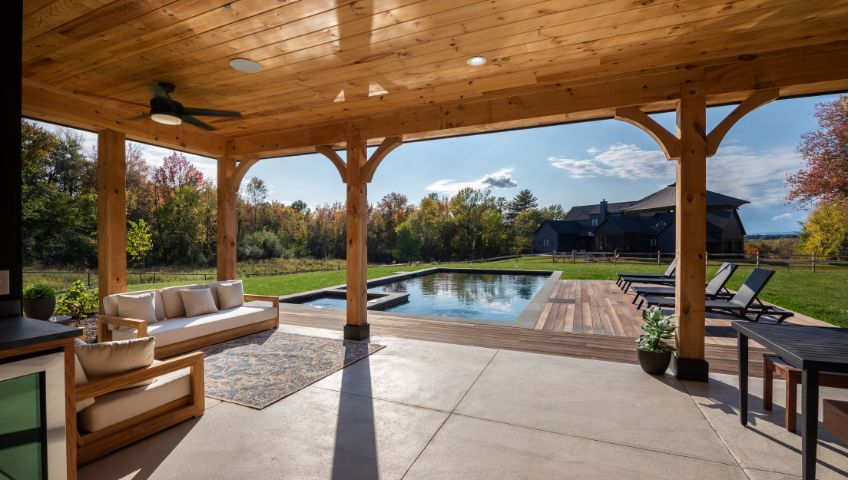
Gone are the days of simply putting together some plants and grass and calling it a landscape. Today’s landscapes integrate technology along with plant materials in exciting ways, from built-in barbeques, pools, spas and multifunction athletic courts to customized outdoor audio, lighting, security, and irrigation systems.

More than being used as a finished element in the landscape, however, technology is now part of the landscaping process from inspiration through planning and construction. Consumers rely on the internet and endless cable TV programs for ideas and use computer programs to make simple plans. Landscape designers take even greater advantage of technology with sophisticated programs to design landscapes, integrate systems, ensure local code compliance, and coordinate with other building professionals. The sheer mass of the available technology is daunting, and while it makes innovative solutions in planning and design possible, integrating the various technologies adds another challenge to the planning and design process.

Sometimes employing the latest in high-tech products can empower consumers to move forward with the project of their dreams. For example, previous clients once had serious concerns about installing a pool in their backyard because of the potential safety problems relating to the couple’s two teenage children. It was important to the couple to be able to monitor the pool at all times, but this was impossible when both parents were working. The solution was to install a video camera that could be accessed via an internet video feed which the clients could monitor from their computers at work. Now this family is enjoying their pool and their security with the help of technology.

Another example of how technology can improve the planning and design process is in allowing professionals to communicate effectively and efficiently with their clients and each other. If your landscape designer uses the AutoCad program, he can easily share blueprints with architects, building contractors, and interior designers. Each of these professionals is immersed in their own field of design and products that are available to the consumer. The architect is typically focused directly on the house or building and pays little attention to what the client might be thinking about for the landscape. Proper coordination between the landscape professional and the architect can result in two separate projects that still fit together in both form and function. This planning process is further impacted by the regulatory growth and control our local governments are placing on our communities. For example, houses, pools, walls, etc… have to be set so many feet from a property line; fences are limited to certain heights and styles; and drainage requirements are new realities that need to be considered. All of these factors are made more manageable by computer planning and research.

The vast array of landscape options available through technology sometimes leads consumers to be overwhelmed with the size and complexity of a project. Sometimes the technology may even overshadow the importance of good design and creativity. A landscape designer will help you wade through options and decide what technologies are most appropriate for your landscape while implementing a creative design that’s both attractive and functional. Thorough planning can coordinate traditional landscaping elements with new technology and break even a large, complex project into manageable pieces. The end result of working through the design and planning process effectively provides you with a completed puzzle. All the pieces have a place within a landscape. The trick is to break down that plan into constructible parts. This puzzle can be completed as a whole project or can be pieced together over a period of time. Comprehensive planning allows you the ability to realize your dreams quickly or over a number of years.

Good planning also results in lower project costs due to the ability to perform the work correctly from the outset and laying the groundwork for future additions. For example, while designing your landscape you might plan to build a patio and install an irrigation system right away, but realize that at some point you would like to install an outdoor lighting and audio system, but probably not for a few years. While your patio and irrigation system are being built, a smart landscape designer will have a PVC pipe system installed underneath your patio and throughout your lawn during construction. When the time is right you can add your lighting and audio systems without ruining the lawn or patio. The best part is that when you get ready to actually install the new systems, the labor involved will be so small that you could probably do it yourself!

Consumers with a comprehensive plan can also be secure in the fact that their dollars are being spent wisely, knowing that work is being performed in a logical sequence. Nothing is worse for a consumer or professional than having to do work twice due to poor planning. Getting it done right the first time is essential. Consider the clients who want to install a pool and a new fence surrounding their property – two expensive projects. They decide to spread out their projects and do the fence this year so their kids and dog can run freely in the yard and to build the pool next year. They go ahead and pick out a fence they really like only to find out a year later that the fence does not meet the local code for pool safety, and that half the fence needs to be taken out to make room for the pool contractor anyway. This kind of situation is easily avoided with careful planning.

As we are bombarded with all of the exciting opportunities that technology makes available to us, we can be overwhelmed and lose sight of our true objective. Client and designer need to be careful to consider all the possibilities without losing sight of both the artistic and functional aspects of the project. As you watch home and garden television shows and peruse the internet, consider all the magical possibilities for your landscape, but please do not lose sight of the most important aspect of developing a project – good design and creativity!!!

Start the Conversation

Recent Posts
Follow Us

Continue reading

Stone Patio or Wooden Deck: Which is Better for Your Home?

Spending more time outside is never a bad idea. One of the best ways to enjoy the outdoor is relaxing on a patio or a deck. But which is better for your home — a stone patio or a wooden deck?

The answer is not as simple as it seems and involves careful consideration before investing in what is likely to be the focal point of your outdoor entertaining, play, and relaxation space.

Some people base their decision solely on their personal preference for the look of wood or the feel of stone. Personal preference, however, is only one of several factors to consider. Other factors include the intended function of the new space and what type of structure will work best with the style of your home. The setting of your property is a factor and whether you want to maximize your privacy or a great view. And the very important issues of maintenance and cost are always a factor in decision-making.

Plan Your Patio or Deck Space

When planning your new outdoor space, ask yourself several questions. Will you use the space for small family gatherings or for entertaining large groups of friends? Are your gatherings usually casual or formal? Will you use the space for reading the paper in the morning, sun tanning in the afternoon, or barbecuing in the evening? Do you have small children? The answers to these questions might already lead you in the direction of a material choice. Large, formal gatherings might seem more appropriate on a smooth, dimensional Bluestone patio, whereas small and casual might fit better with a traditional, rustic cedar deck. If you have children or grand-children you might avoid stone altogether for the softer feel of wood.

Next, you should consider the style of your home. Some home styles and finishes (brick, vinyl, wood, etc.) work better with stone patios and others with wooden decks. Think about whether your proposed structure will interfere with windows in your home, and also consider the interior floor finishes of the adjoining room in the home, since you may want to carry over a color, theme, or tile pattern.

Consider the Surroundings of the Patio or Deck

The setting of your property is another factor to consider in deciding between a patio or a deck. Whether your yard is level or steeply sloped is also extremely important and may end up trumping all other factors. Natural stone lends itself especially to level, at-grade installations, while wood is usually preferred for sloping, elevated installations. An at-grade patio makes it easier to create privacy from neighbors. An elevated deck can leave you out in the open, which is exactly where you might want to be if privacy is not an issue. If you want to accentuate a grand vista, an elevated deck might be the preferred option. However, remember that the required railings may interfere with the view you are trying to emphasize.

Maintenance of each type of material is also a significant concern. With proper base preparation to create the correct pitch for water to drain, natural stone requires very little maintenance, perhaps replenishing the sand grout occasionally. There is really no need for any kind of sealing or coloring to preserve a stone patio. It is also easy to wash if desired, and real stone will not lose its color and will never rot. Most wood products do require regular cleaning as well as staining and/or sealing to maintain color and to extend the lifespan of the deck. Wood will also rot, and should be kept dry by providing air circulation above and below decks. If you are considering an artificial composite polywood material because it needs virtually no maintenance, keep in mind that generally such materials have a tendency to stain.

Cost is Always an Issue

Finally, when deciding between a stone patio and a wooden deck, you will have to determine what your options will cost. You must consider not only the cost of the material itself, but how much it will cost to install. Stone is typically an inexpensive product to buy, but expensive to install. It is also very heavy, and might require special equipment to deliver to your construction site. New technology in machining and sawing natural stone is now making it easier and more cost effective to use natural stone. Conversely, the material cost for wood products is usually expensive. Then again, availability of long pieces makes it easy to cover large areas quickly, which can decrease labor costs. Wood can be easier to work with, because it is much lighter, more forgiving, and can be used to create custom shapes. Artificial composites are more difficult to work with than wood and are less forgiving. Finally, changes in elevation or slope can have a significant impact on the cost of construction. Building a stone patio on a slope will typically be more expensive than an elevated wooden deck. In this case the patio would require large amounts of concrete foundation and retaining walls with a stone veneer.

Once you decide on a stone patio or a wooden deck, you must still choose what specific stone or wood you will use. The most typical types of natural stone material used for patios are dimensional stones with a smooth surface, such as New York State style or Pennsylvania style Bluestone or Tennessee Valley stone. Irregular shaped stone, such as Champlain Stone’s Corinthian Granite or South Bay Quartzite, has a rougher, sometimes more rustic appeal. A natural clay brick offers many style and color possibilities as well. The most common varieties of wood decking are Cedar or Mahogany, which come in various thicknesses. There are also some less common choices to consider, such as the Brazilian Redwood Ipe, and Teak. Due to the wide diversity of stains, color possibilities of wood are vast, and with the work of skilled carpenters, style choices are also unlimited.

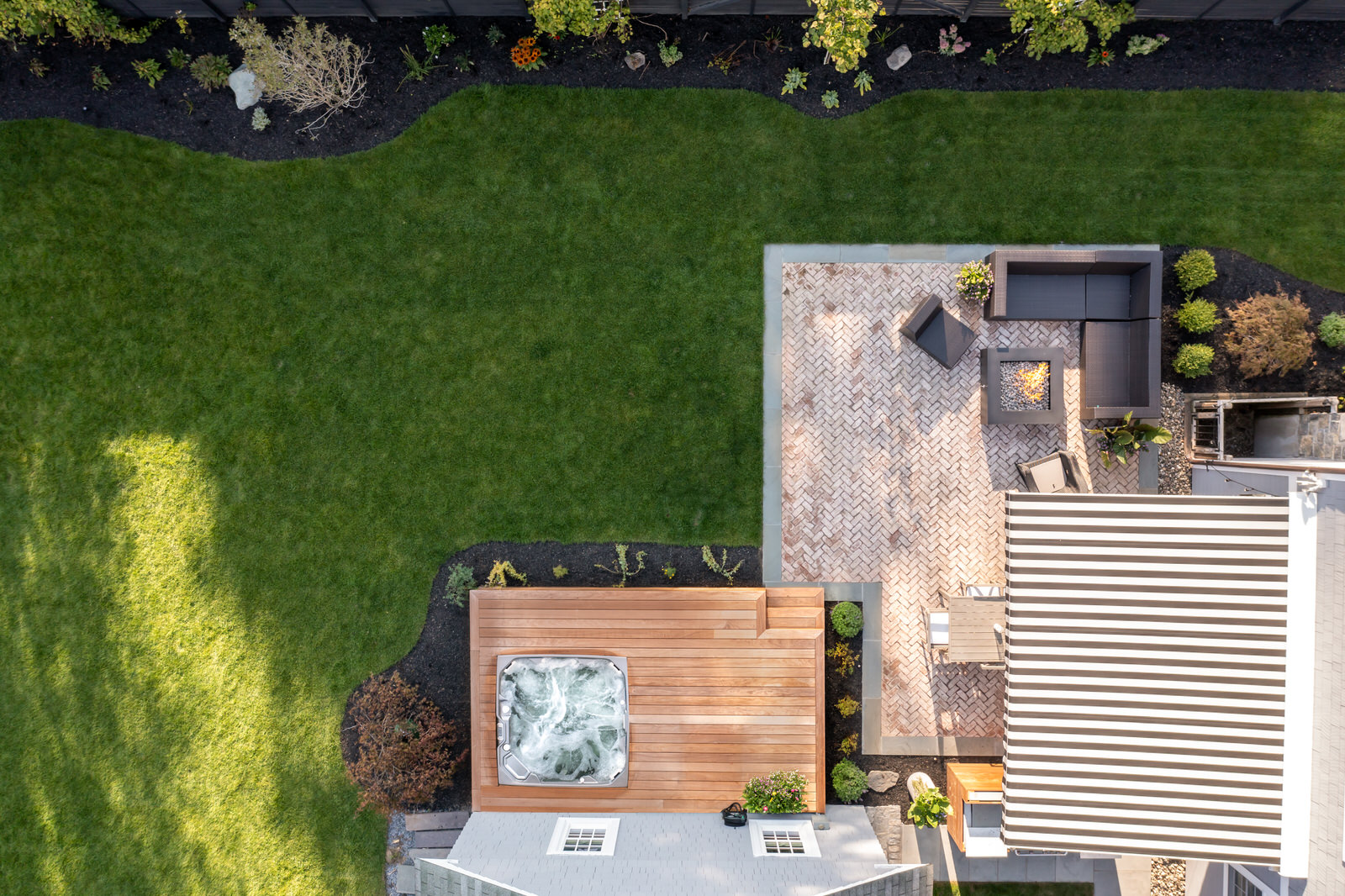
Finally, if you still can’t decide between a stone patio and a wooden deck, keep in mind that wood products and natural stone work very well together, both artistically and stylistically. Having an elevated wooden deck is often nicely accentuated with a lower stone patio. Problem solved.

Start the Conversation

Recent Posts
Follow Us

Continue reading