Author: Karen Redick

Modern Custom Pool Features for Your Backyard

Swimming pools have evolved into a quintessential backyard feature, offering a blend of relaxation and technological sophistication. 

Today’s pools are fully customizable, available in various shapes and sizes, and equipped with an array of modern amenities that extend the swimming season and elevate the overall experience.

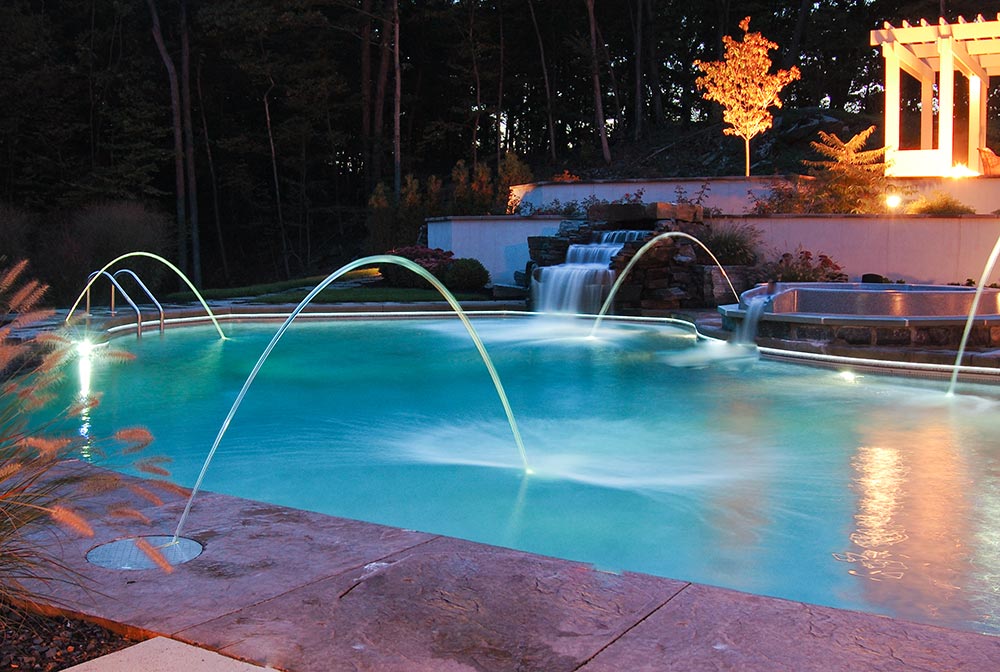
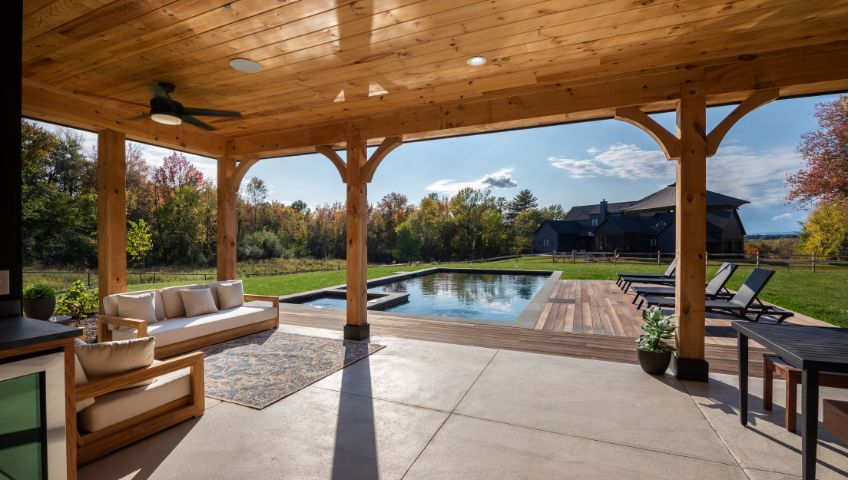
Water features, such as mesmerizing waterfalls, not only enhance the aesthetic appeal of a pool but also provide soothing sounds that promote relaxation. Additionally, they can cleverly conceal unsightly equipment or block unwanted views, creating a tranquil oasis in your backyard. The inclusion of an infinity edge, as seen here, not only maximizes the use of space but also offers breathtaking views of the surrounding landscape.

LED lighting has become a popular addition to modern pools, allowing for nighttime swimming and enhancing visual appeal. With the ability to control lighting, fountains, and even pool temperature directly from a smartphone, pool management has never been more convenient or fun.

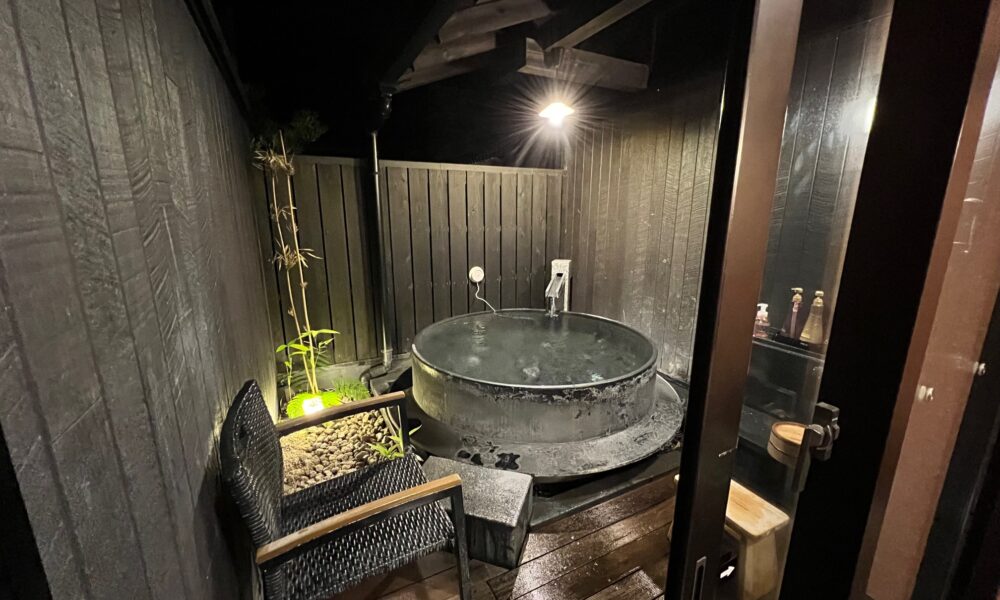
Seating options have also undergone a transformation, with innovative designs that invite relaxation directly in the pool itself. Sun shelves provide a perfect spot for lounging in shallow water, offering respite from the summer heat and creating a safe play area for children. Custom-designed hot tubs, seamlessly integrated into the pool design, offer year-round relaxation and health benefits, reminiscent of Japanese onsen experiences.

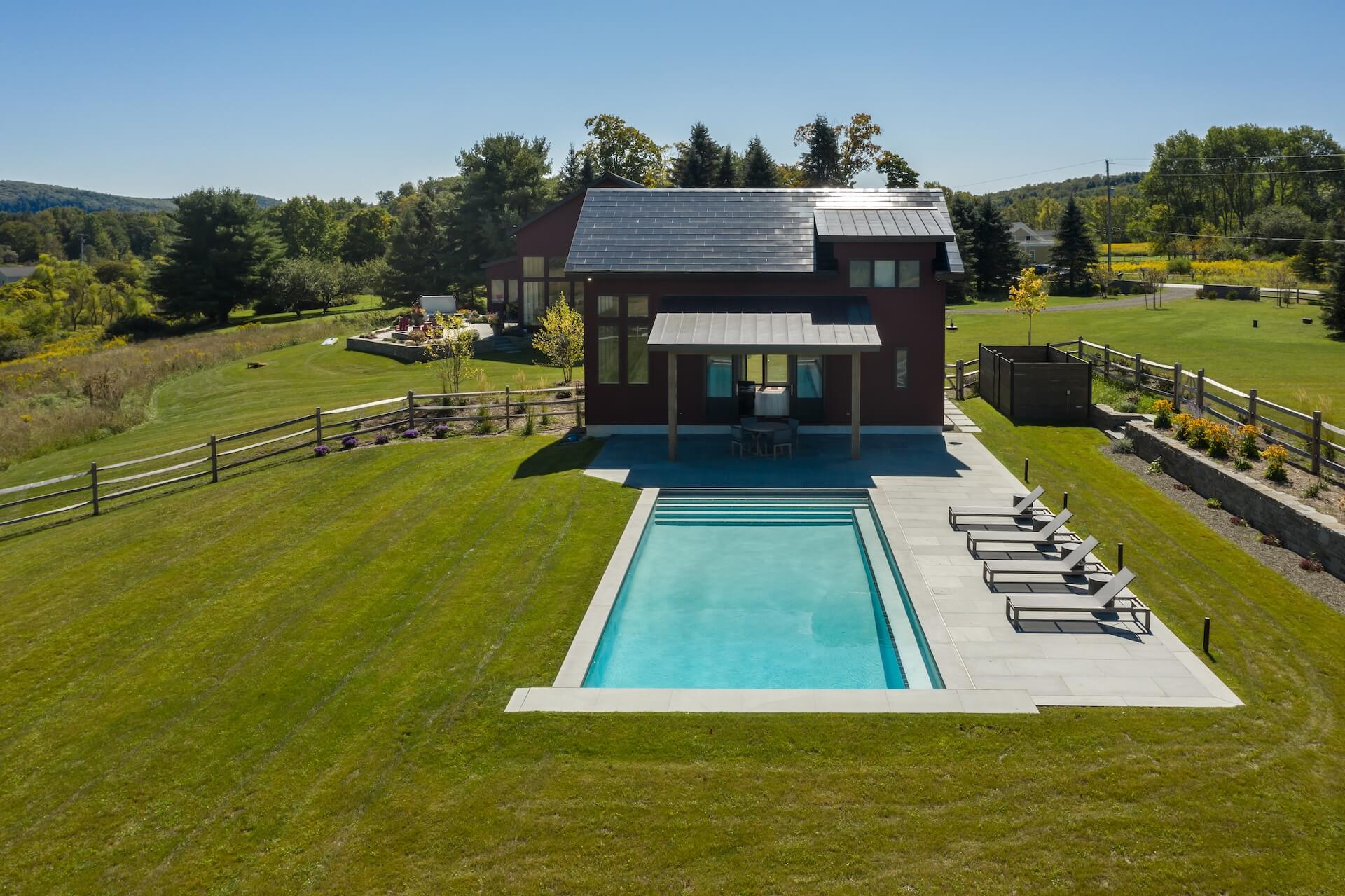
Finally, custom benching adds both style and functionality to poolside gatherings, providing ample seating for guests while connecting them with the surrounding landscape. Whether it’s a small intimate bench or a sprawling one that runs the length of the pool, these features enhance the overall ambiance and create unforgettable moments for family and friends to cherish.

In summary, modern swimming pools offer a blend of luxury, comfort, and convenience, transforming ordinary backyard spaces into extraordinary retreats tailored to meet your every need and desire.

Start the Conversation

Recent Posts
Follow Us

Continue reading

Brick: A Timeless Hardscape Material with Enduring Charm

Brick has stood the test of time as one of the oldest known hardscape materials, dating back over 5,000 years to the ancient Egyptians.

Initially crafted from dried clay or mud with straw as a binder, brick production evolved significantly during the Industrial Revolution with the introduction of mechanized kiln-drying techniques. By the early 1900s, brick became the predominant material in building construction.

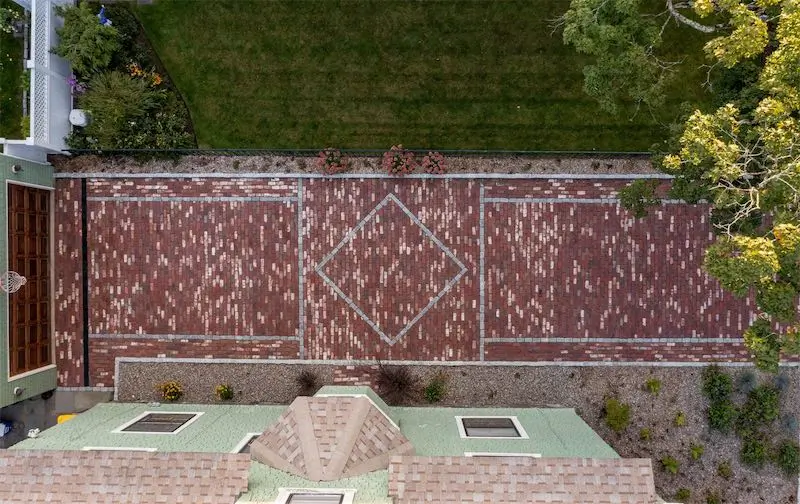
Today, brick has seamlessly transitioned into landscape design and construction, offering a myriad of applications beyond its traditional use as a veneer. From walkways and entries to patios, pool coping, and fire pits, brick adds a touch of historical character to any outdoor space. While the classic red brick often evokes a rustic or cottage-like ambiance, advancements in technology now offer a range of colors and sizes, making brick suitable for contemporary landscapes as well.

For projects requiring a touch of heritage, reclaimed brick provides a unique solution. Salvaged from demolished structures, reclaimed bricks retain their original color and aged charm, lending new designs the timeless aesthetic of a century-old site.

While brick boasts affordability and durability, its design versatility may be somewhat limited compared to other materials. However, various patterns and orientations offer some flexibility, albeit within the confines of the traditional reddish-brown color palette. Proper installation, particularly with a concrete slab base to prevent heaving, is crucial for ensuring a stable and safe surface, especially in cooler climates prone to freeze/thaw cycles.

In conclusion, brick remains a classic choice for hardscape projects, offering enduring beauty, historical allure, and practical functionality for landscapes of all styles and eras.

Start the Conversation

Recent Posts
Follow Us

Continue reading

Discover the Beauty and Versatility of Bluestone in Hardscape Design

Bluestone: the timeless choice for designers across the Northeast. With its supreme elegance and versatility, bluestone stands out as a go-to material for crafting both functional and beautiful spaces. But what makes bluestone so special?


Origin and Varieties

Bluestone, a sedimentary rock, comes in two main varieties: Pennsylvania Bluestone and Shenandoah Bluestone. Pennsylvania Bluestone, found in Pennsylvania, Western New Jersey, and the Catskill Mountain region of New York, boasts a stunning array of colors—from blue and brown to gray and tan. On the other hand, Shenandoah Bluestone, quarried in Virginia’s Shenandoah Valley, offers a classic bluish-gray hue.

Applications

The versatility of bluestone knows no bounds. From walkways and patios to pool copings and fireplace hearths, bluestone lends itself effortlessly to various landscape features. Its natural variations in color and texture make for captivating design elements in both contemporary and rustic settings.

Contemporary vs. Rustic Designs

In contemporary spaces, bluestone’s clean lines and rich blue-gray color take center stage. Flamed bluestone, treated to perfection, offers a smooth finish ideal for sleek, modern landscapes. Meanwhile, rustic designs embrace the organic charm of rough-cut bluestone, adding character and warmth to outdoor spaces.

While bluestone is durable in all climates, its dark color can make it uncomfortably hot in warmer regions. Additionally, the initial cost of bluestone may come as a surprise, but its lasting beauty often justifies the investment.

Bluestone transcends trends, offering timeless elegance and unmatched versatility in hardscape design. Whether you’re aiming for a contemporary oasis or a rustic retreat, bluestone delivers the perfect balance of form and function.

Explore the possibilities with bluestone and elevate your landscape to new heights of beauty and sophistication.

Start the Conversation

Recent Posts
Follow Us

Continue reading

Illuminate Your Outdoor Space and Elevate Your Landscape with Lighting

Looking to enhance the beauty and safety of your outdoor oasis? Longing to extend your entertaining hours late into the night? Look no further than Redbud for all your exterior lighting needs.

Our team specializes in crafting customized lighting designs that not only meet but exceed your expectations. With meticulous attention to detail, we consider every aspect of your outdoor space, from light direction and color options to lumen output and fixture type. No detail is overlooked as we strive to create a lighting masterpiece that will dazzle for years to come.

Why Low Voltage Lighting?

There are many benefits to adding exterior light fixtures to your property:

  • Illuminate darker areas to increase safety and security.
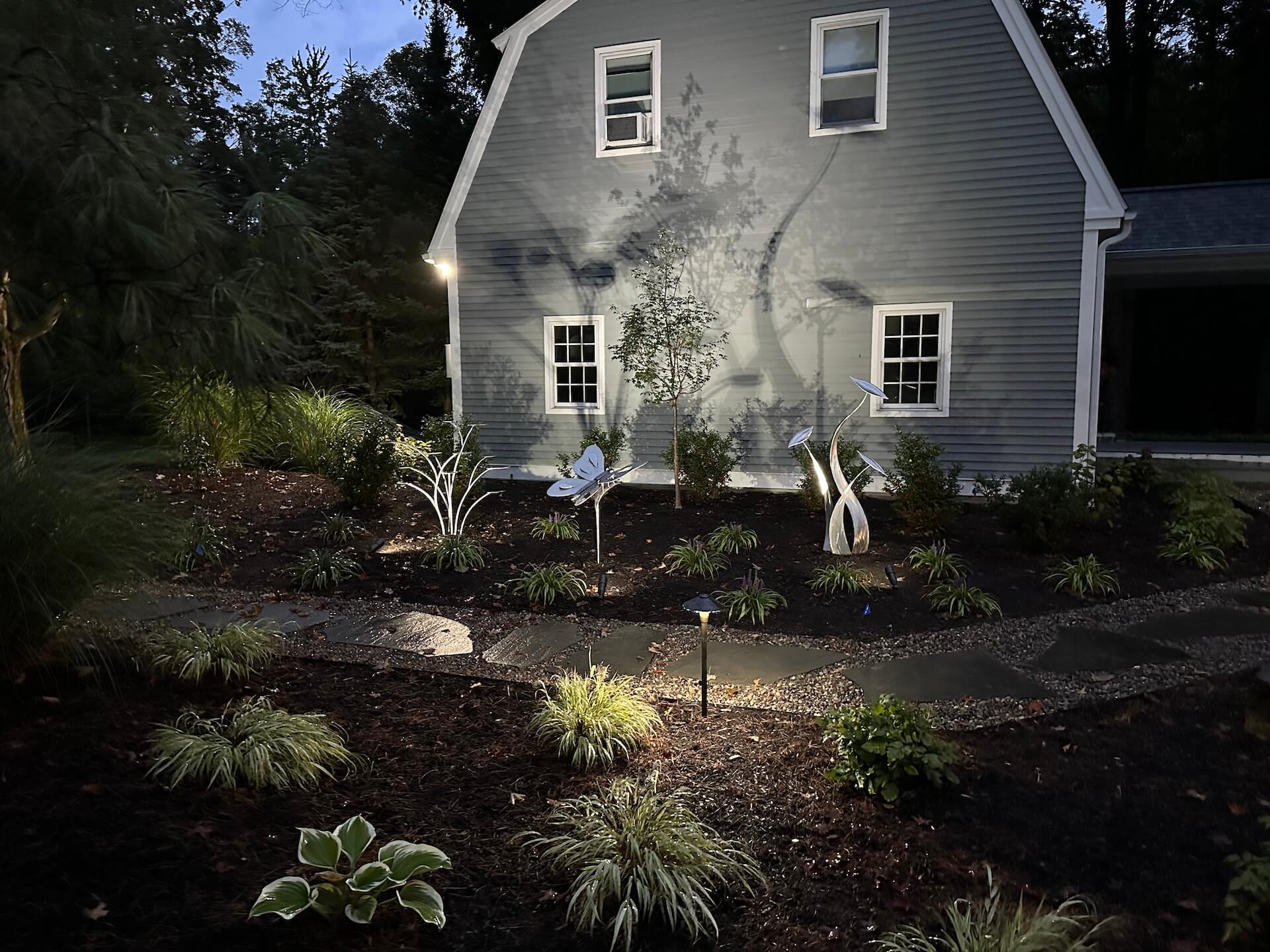
  • Accentuate architectural elements on your home to enhance curb appeal.
  • Highlight pathways to promote circulation patterns.
  • LED fixtures are both energy and cost efficient.
  • Available app-based control systems allow for system management via a smart device.

Whether you’re aiming to highlight architectural features, create inviting pathways, or set the perfect ambiance for outdoor gatherings, Redbud has the expertise and creativity to bring your vision to life.

Don’t let your outdoor space fade into darkness—schedule a consultation with our design team today and let us illuminate your world with stunning lighting solutions.

Let Redbud be your guiding light to a more beautiful and functional landscape.

Start the Conversation

Recent Posts
Follow Us

Continue reading

Buying Local – S2E6: Design & Development, Hand in Hand

In this episode, our host Mike Nelson interviews Geff Redick, owner of Redbud Development!

Redbud’s specialty is improving your living space – not just “adding a pool”, but considering every factor of how you live in and use the space! For any project big or small, Redbud’s thoughtful building acumen impresses every time!

00:51 – Do Not Disturb
02:29 – An Introduction to Redbud: Designers AND Builders!
03:30 – Walk With Me: Thoughtful Development
05:58 – Redbud Blooms: An Origin Story
08:23 – A Truly Unique Project
11:19 – The Biggest Challenge: Starting Up!
12:32 – Economic Hopscotch
15:03 – What’s Next?
17:18 – Creating the Right Environment from the Start
19:59 – How to Get in Touch
20:54 – Closing Remarks

How is what we are building going to make your life better?

Listen On
Recent Posts
Follow Us

Continue reading

Nurtured by Nature

No matter how remarkable the interior of a home is, it’s better when paired with a relaxing outdoor living space and the unrivaled beauty of nature.

“I believe that people are happier when they spend more time outside,” says Karen Redick, founder and controller of Redbud Development, Inc. “It’s calming to hear the sound of wind rustling in trees, look at reflections in water, or rest on a deck surrounded by flowers as you watch hummingbirds flit around the patio.”

For Redbud Development, creating a connection to nature is personal and requires an evolving understanding of each client’s unique vision. For one client, this meant finding ways to marry the couple’s love of Japan with their family home by adding a tranquil teahouse built underneath a majestic tree and oriented northwest to maximize the sunset view. The space serves as a spiritual haven for daily yoga and meditation.

As with all custom projects, this one began with a design process centered on the client’s vision and continued through construction as Redbud Development managed a team of subcontractors to find opportunities to tailor the space every step of the way.

“We maintain the client’s vision from the initial design through installation,” says Geffrey Redick, founder and licensed landscape architect.

“A lot can be lost in translation if someone designs the landscape and then you turn to someone else to build it. As we get to know the client better, we learn more about how they live and what they value so we can refine the construction details to ensure that everything reflects their lifestyle.”

This article originally appeared in Architectural Digest.
Recent Posts
Follow Us

Continue reading

The Hidden Costs of Skipping Site Planning: A Sacandaga Lake Case Study

A Closer Look at the Project

A unique hand hewn post and beam house was designed for a home on 2.2 lakeside acres. The design of the house was developed by the client, architect and builder. Significant thought was paid to the interior layout and design of the home, the structural character of the house and views to the lake.

The house looked gorgeous on paper. The old existing house was demolished and the new foundation was installed; only then did questions begin and the exterior site issues become apparent. The client hired Redbud to solve the exterior site issues and consider other elements for the property.

A conceptual design was initiated to assess the site and integrate the client desires. The following specific components highlight major areas of concern, the solutions and potential cost savings that could have been realized if the exterior design of the property was considered earlier in the project.

Issues & Construction Costs

Grading and Drainage

The elevation of the house was set too high, creating the need for a retaining wall on the right side property line to prevent runoff negatively affecting the neighbors’ property as well as significant drainage problems at the front entrance to the home. With the correct elevation, the retaining wall, additional grading and drainage components would have been eliminated or drastically reduced resulting in an approximate cost savings of $18,000.

Utilities

The location for the water lines, electric service, propane tank, HVAC, generator, etc… were also not considered in advance. All of these components require not only space within the landscape but also room below the surface. For example, electric lines cannot be buried in certain proximity to gas lines. When all of these elements were assessed as a whole the propane tanks needed to be located significantly further from the house than was ultimately necessary which caused additional excavation expenses of $3,600.

Patio Spaces, Walls & Septic Field

Outdoor entertaining spaces are typically designed as a natural extension of the home. In this case, a 15-foot by 55-foot patio was originally planned along the lakeside of the house. However, to preserve the views from the master bedroom and great room, only an 18- to 20-foot section near the kitchen could realistically serve as the main family entertaining area—leaving limited space for the desired features.

The site’s elevation created another challenge. The patio sits nearly six feet above the lawn, requiring approximately 145 feet of retaining walls and steps to be constructed along the lakeside of the home. While these walls will ultimately enhance the landscape visually, they also add significant cost to the project.

These structural requirements also consumed valuable space on the property, further limiting the area available for the septic field. With the location of the house, required property line setbacks, and shoreline restrictions already in place, the septic system ultimately had to be carefully fit into the remaining space.

If the outdoor entertaining area—and its associated elevation and slope—had been considered earlier in the home’s design process, the retaining walls could have been significantly reduced. Doing so would have lowered the overall construction cost by approximately $48,000.

Existing Vegetation

The property has a number of mature trees; one in particular is a large sugar maple standing 45’ tall directly behind the new garage. Unfortunately, under this majestic beauty was the illogical space chosen for all the contractors to park their trucks and equipment. An initial site analysis would have dictated a different construction staging area and guaranteed the survival of this tree. Now, approximately $4,700 will need to be spent to feed, prune and manage the health of the tree over the next several years to ensure the tree will live and be a permanent fixture of the property.


Lessons Learned

Since the design of the house was completed and construction commenced prior to any consideration for the landscape elements, there were limited opportunities to modify the design of the house to better integrate the functional and aesthetic exterior elements. The involvement of a landscape architect is much more constructive and cost effective when introduced to the project before the building is complete, even before ground-breaking, in the early concept and planning stage.

Landscape architects can assist clients with understanding the budgetary considerations of the functionally required aspects of the site as well as planning for the more recreational, creative and artistic accompaniments. This client is now forced to allocate approximately $74,000 of their overall house budget to fix problems that could have been mitigated with some forethought.

Looking for a landscape designer around Sacandaga Lake? Contact us today at 518-691-0428 to schedule a consultation!

Location

43.4878709,-74.4204572

Sacandaga Lake, New York

Other Case Studies

GET IN TOUCH

Let’s Talk About Your Project

Your home deserves this level of care. Let’s start with a conversation about what’s possible.

Start the Conversation

Continue reading

Small Lot, Big Vision: Designing a Backyard Retreat in Saratoga Springs

A Closer Look at the Project

Redbud was invited to this single-family residence in an older district of Saratoga Springs. The house is relatively small and is in need of repairs and/ or upgrades both inside and out.

The property measures approximately 25’ x 130’, with the house positioned nearly on the property lines. The client purchased the home as an investment opportunity while also envisioning it as a place to work remotely or stay when commuting to New York City.

During the initial meeting, several key objectives for the property emerged.

Design Intent: Create a relaxing, inviting backyard that provides greater privacy, softens the visual impact of the neighboring barn, and embraces the character of the surrounding urban setting.

Design Components

  • Patio Space Designed to comfortably entertain 6–8 adults, using reclaimed brick or a similar rustic paving material.
  • Outdoor Kitchen – Integrated cooking and seating area for entertaining.
  • Water Feature (Optional) – Consideration for a feature that adds sound and visual interest.
  • Low-Voltage Lighting System – Subtle lighting to enhance safety, ambiance, and nighttime use of the space.
  • Carriage House – Integrated into the overall design, with flexibility for alternative uses if construction is postponed.
  • Off-Street Parking – Parking located at the rear of the property.
  • Rear Wraparound Porch – Porch addition with stair access connecting the home to the backyard.
  • Overhead Structures – Potential pergola or similar structure to create shade and architectural interest.
  • Hammock Area – Dedicated space for relaxation within the landscape.

Restrictions & Limitations

  • Southern Property Line – A two-story multifamily residence and a large red barn overlook the backyard, creating significant privacy concerns and direct sightlines into the space.
  • Northern Neighboring Home – A nearby single-family house also has direct views into the backyard.
  • Property Line Setbacks – Zoning setbacks limited where structures, patios, fencing, and other features could be located.
  • Dual Street Frontage – The property is bordered by public streets at both the front and rear, adding additional planning considerations.
  • Impervious Surface Limits – Local footprint regulations restrict the amount of allowable impervious coverage on the lot.
  • Existing Sewer Line – A 30+ year-old sewer line runs beneath the backyard, creating potential maintenance considerations for future construction.

Design Approach

After reviewing the client’s goals and the site constraints, we recommended a collaborative design approach that included bringing an architect onto the project team. This allowed all components of the project to be integrated into a single comprehensive concept rather than developed independently.

The goal was to create a complete conceptual design that incorporated every desired element while also identifying additional opportunities for improvement. The final plan was structured so the project could be built in phases, allowing the client to move forward with construction over time while maintaining a cohesive long-term vision for the property.


Lessons Learned

The client’s initial plan was to build the project in phases—constructing the patio first, then the carriage house, followed by the deck and other elements. At first glance, this seemed like the simplest approach and would have required minimal approvals from the local planning and building departments.

However, because of the site’s restrictions and setbacks, this strategy could have created major problems. The patio likely would have been built in what appeared to be the most logical location. Later, when the client attempted to add the deck or carriage house, the city could have required a variance to meet zoning requirements—or even required the newly built patio to be removed.

The variance process can take three to four months, often involves additional costs, and adds significant uncertainty and stress. There is also no guarantee that the variance will be approved.

By investing $3,000–$6,000 in conceptual design services upfront, the client gained a fully integrated plan for the property. Not only did this approach produce a more thoughtful and cohesive design, but it also helped avoid an estimated $30,000–$50,000 in potential construction and redesign costs later on.

Location

43.0821793,-73.7853915

Saratoga Springs, New York

Other Case Studies

GET IN TOUCH

Let’s Talk About Your Project

Your home deserves this level of care. Let’s start with a conversation about what’s possible.

Start the Conversation

Continue reading

Saving the Maple: A Front Entrance Transformation in Clifton Park

A Closer Look at the Project

The owners of a residence in a modest development in Clifton Park had several design and construction challenges they wanted to address at their home and with a very focused budget.

The overall design intent was to create an inviting front entrance, develop a small sitting area where the owners/ guests could sit and enjoy the quaint street life. Overall, they wished to enhance the curb appeal of the house, not only using plant material, but architecturally as well.

Design Components & Challenges

One of the most important aspects of the design was the client’s strong desire to preserve a large Japanese Maple specimen tree measuring roughly twenty-five feet tall and twenty-five feet wide. The challenge was its location. The tree sat directly in front of the home’s entrance, blocking the view and circulation to the front door.

Leaving the tree in place would have compromised the overall design of the entry. Relocating it, however, would require a significant portion of the construction budget. After careful consideration, it was ultimately decided that relocating the tree would provide the best aesthetic solution.

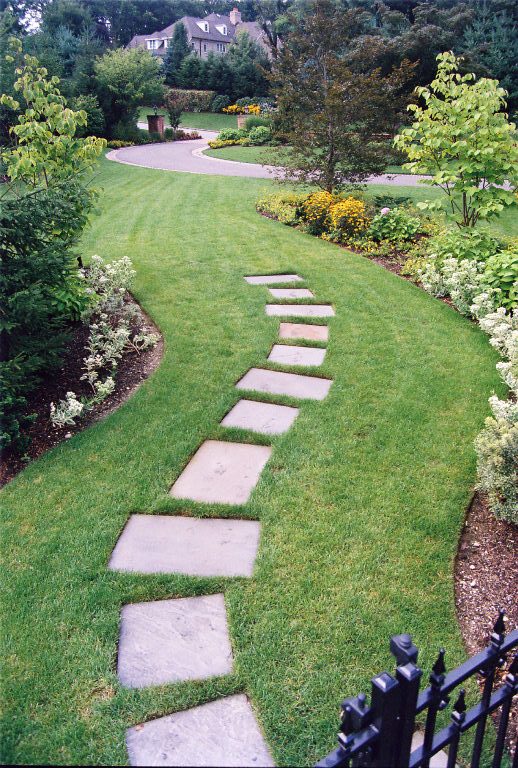
The final design included the relocation of the maple and the construction of a modest boulder wall to create level ground for the tree’s new location. A new random dimensional bluestone walk was also installed, along with additional plant materials to add color and visual interest to the landscape.

Architectural improvements were also made to the front of the home. These included adding a dormer to the existing front porch roof, removing the original railing and support posts, and installing two larger, more prominent columns. Additional updates included upgraded porch lighting, a new entrance door, and replacing the existing window trim on the front façade with larger, more substantial trim work.

The project also required addressing the steep slope along the east side of the house while carefully working around existing utilities that ran from the corner of the home to the street. All design and construction work was completed within the client’s strict $42,000 budget.


Construction Administration

After developing and reviewing several design solutions and consulting with architect Tim Gallagher of Architex in Latham, the final design was approved by the homeowner.

Work began with the relocation of the maple tree—a complex and delicate process due to its enormous weight, estimated at several tons. The root system was first excavated by hand with the assistance of an air spade, a specialized tool that uses high-pressure air to remove soil from around the roots. When used properly, this process clears excess soil without damaging the tree’s root structure.

Once the tree was carefully moved to its new location, a boulder wall was constructed around it to level the surrounding space and provide a stable soil bed for the root system. The root ball itself measured roughly 35 feet in diameter when it was relocated.

With the tree successfully established in its new setting, the remaining landscape work moved forward. A new bluestone walkway was installed, plant materials were added throughout the landscape, and new lawn areas were seeded.

Finally, improvements were made to the front façade of the home, including new window trim, a new front door, and the addition of a dormer above the entrance supported by heavier columns. Additional upgrades included irrigation system improvements and the installation of outdoor lighting fixtures.


Benefits & Lessons Learned

The collaborative working relationship between the client and Redbud allowed us to have focused and honest discussions about project goals, desires and budgets. The client was given many different options and had to do some tough prioritizing in order to stay within their budget. We were very pleased that they chose to invest a portion of their budget to save a beautiful old tree instead of simply cutting it down to get it out of the way.

In the end, as we continually declare, having a thorough and well thought out design in placed allowed us to organize and coordinate the multiple trades needed to implement the work and maintain a strict timeline therefore keeping the budget in check.

Location

42.8631868,-73.7812103

Clifton Park, New York

Other Case Studies

GET IN TOUCH

Let’s Talk About Your Project

Your home deserves this level of care. Let’s start with a conversation about what’s possible.

Start the Conversation

Continue reading

How To Use Bluestone in Your Landscape Design

Landscape designers all around the country love using different materials to create both functional and beautiful spaces.

With so many to choose from it can be like trying to find something to watch on Netflix! But there is one hardscape material that always stands out like one of my favorite movies or TV shows: bluestone. What is bluestone and how can you use bluestone in your landscape design?

What Is Bluestone?

Bluestone is the go-to material for designers on many hardscape projects here in the Northeast. Why? It’s beautiful, elegant and versatile. Bluestone is a sedimentary rock composed of different variations of limestone depending on the source region.

Most of what we see in upstate New York falls under the category of Pennsylvania Bluestone. This stone is quarried in Pennsylvania, Western New Jersey, and the Catskill Mountain region of New York. The other variety is Shenandoah Bluestone and is quarried in the Shenandoah Valley of Virginia. The primary difference between the two is their color configuration. Shenandoah Bluestone is primarily bluish-gray, and will continue to gray over time. Pennsylvania Bluestone tends to include many different colors, including blue, brown, gray, tan, and rusty tones.

Since the range of colors with all-natural bluestone is so vast, it can make for some very interesting landscape elements. These elements are seemingly endless; imagine walkways, entryways, veneer applications, patios, pool copings, stair treads, slab stairs, water features, benches, tables, stepping stones, retaining walls, etc.. Bluestone also has interior applications such as honed bluestone tiles for flooring, fireplace hearths, or even vertical stone feature walls.

How To Use Bluestone in Your Landscape

Bluestone is versatile enough to be used in both contemporary and rustic designs. Contemporary spaces focus on creating straight lines and more rigid forms, so your landscape features will mimic the clean lines of your bluestone. Bluestone can be used in its natural state or it can be ‘flamed’. Flamed bluestone undergoes a heat-treated process which removes the imperfections in the stone, resulting in a perfectly smooth and rich blue-gray color. Normally, flamed bluestone is slightly more expensive due to this process. The upside is that it provides amazing impact in the contemporary landscape.

Many clients deem the beauty of bluestone is worth paying the extra money as it takes their landscape to the next level.

More rustic designs generally showcase organic motion and irregularity, so your bluestone of choice will be the all-natural and rougher cut to help achieve that feeling or mood.

We believe the upsides of bluestone vastly outweigh the downsides, but there are a few things that you should consider before choosing bluestone for your landscape project. Bluestone is extremely durable in all climates, hot or cold. But in warmer climates bluestone can get rather hot to the touch due to its dark color. Therefore, it is not recommended for use in pool patios in southern regions. Walking on bluetone with bare feet could prove to be rather uncomfortable.

As if it didn’t already potentially burn you, the cost point of this beautiful stone usually comes as a surprise. Natural stone is typically more expensive up front due to the time and labor needed to quarry, process, pack and ship the material. However, locally quarried stone in the northeast is cheaper than other stone options from other regions or imported. Manmade options like brick or concrete are less expensive up front but may require more maintenance. Many clients deem the beauty of bluestone is worth paying the extra money as it takes their landscape to the next level.

Start the Conversation

Recent Posts
Follow Us

Continue reading